Section Menu:
What You Need to Know
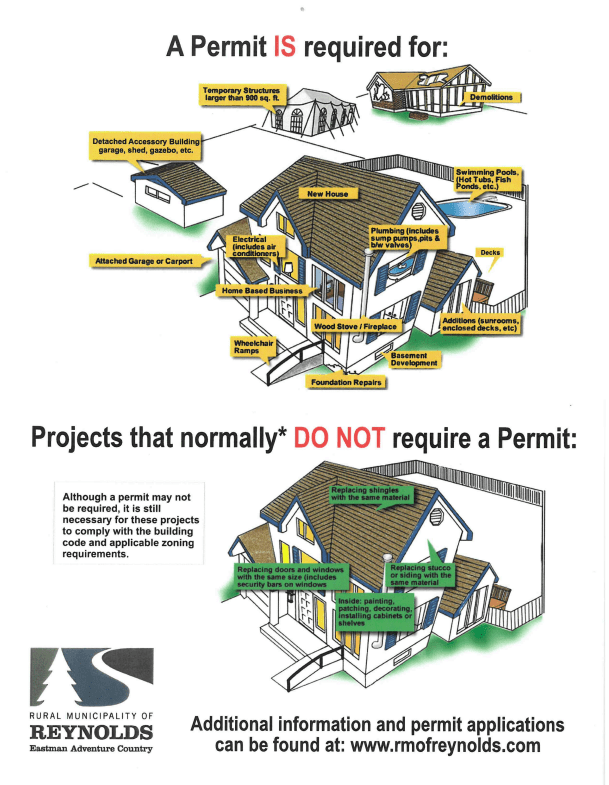
Adding a wood-burning appliance or fireplace is a common way to provide supplemental heat in the RM of Reynolds. Because these installations involve high heat and combustible materials, they are strictly governed by the Manitoba Building Code and provincial safety standards to protect your home and family.
The installation of wood stoves, pellet stoves, and fireplaces is regulated to ensure proper clearances from walls and furniture, as well as safe chimney venting. While the Zoning By-law focuses on the building itself, the Manitoba Building Code provides the technical requirements for the installation.
Regulatory Highlights
Construction & Installation
All installations must comply with the Manitoba Building Code and are often guided by CSA B365 (the installation code for solid-fuel-burning appliances):
- Clearances: Minimum “clearance to combustibles” must be maintained between the stove/pipe and any walls, ceilings, or furniture.
- Floor Protection: Non-combustible floor protection (hearth pads) must extend a specific distance beyond the appliance on all sides.
- Outdoor Wood Furnaces: If you are installing an outdoor wood-burning appliance, it must meet specific setback requirements from property lines and neighboring dwellings to manage smoke and fire risk.
WETT
Certified
While the RM issues the building permit and performs a final inspection, many insurance providers also require a WETT (Wood Energy Technology Transfer) inspection.
Professional Verification: A WETT-certified technician checks the appliance, chimney, and venting to ensure they are installed safely and meet current codes.
Insurance Compliance: It is highly recommended to contact your insurance provider before installation to confirm their specific requirements.
Gather Required Documentation
When applying for your permit, you will typically need to provide:
Manufacturer’s Specifications: A copy of the installation manual for the specific stove or fireplace model.
Floor Plan: A simple drawing showing where the unit will be placed in the room and the distances to nearby walls.
Chimney Details: Information on the type of chimney and how it will exit the building (through the wall or roof).
Safety
Triggers
Certification: Only install units that carry a recognized certification mark (such as ULC, CSA, or Warnock Hersey).
Ventilation: Proper air supply is critical; modern, airtight homes may require an “outdoor air kit” to provide oxygen for the fire.
Maintenance: Regular chimney sweeping and ash removal are required by provincial fire safety guidelines to prevent chimney fires.