Section Menu:
What You Need to Know
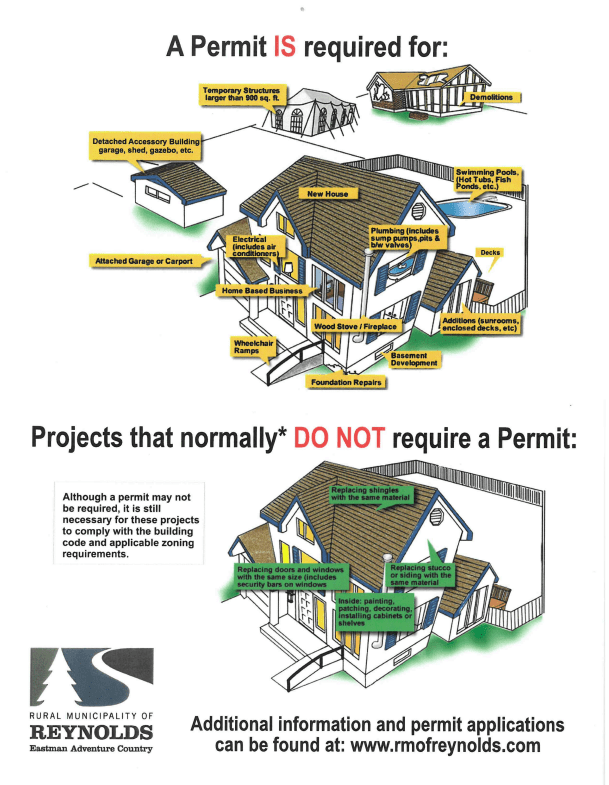
In the RM of Reynolds, any structure capable of containing more than 2 feet (24 inches) of water is regulated to ensure it is safely secured and properly situated on the property. This includes permanent in-ground pools, above-ground pools, and outdoor hot tubs.
Regulatory Highlights
Safety Enclosures & Fencing
Public safety is the priority for water features. The Manitoba Building Code requires a secure barrier to prevent unauthorized access:
- Fencing Requirements: Most pools must be completely enclosed by a fence at least 5 feet (1.5m) high with a self-closing, self-latching gate that can be locked.
- The Hot Tub Exception: For outdoor hot tubs at single-family dwellings, a fence may not be required if the tub has a lockable cover that is strong enough to support the weight of an adult.
- No “Climbable” Surfaces: Fences must be designed without horizontal rails or footholds on the exterior that would allow a child to climb over.
Verify Setbacks (Bulk Requirements)
Hot tubs and pools must be placed in accordance with the yard requirements for your zone:
- Location: These are typically restricted to the side or rear yards and cannot be placed in the required front yard.
- Distances: The water’s edge and any associated decks or mechanical equipment (pumps/filters) must maintain minimum distances from property lines and the main dwelling.
Electrical
Safety
All outdoor water installations involve significant electrical requirements:
- Hydro Permits: A separate electrical permit from Manitoba Hydro is mandatory for the wiring of pumps, heaters, and lighting.
- GFCI Protection: All electrical components must be equipped with Ground Fault Circuit Interrupter (GFCI) protection to prevent shocks.
Gather Required Documentation
Your application must include:
- Site Plan: Showing the location of the pool/tub, the fence/gate location, and distances to property lines.
- Manufacturer Specs: For hot tubs, include the specifications of the lockable safety cover.
- Status of Title: A copy issued within the last 30 days.
Important Considerations
In-Ground Pools: These require engineered structural plans to ensure the basin can withstand local soil conditions and frost.
Water Discharge: When draining your pool or hot tub, water must be managed on your own property and cannot be discharged in a way that impacts neighboring properties or municipal drainage systems.